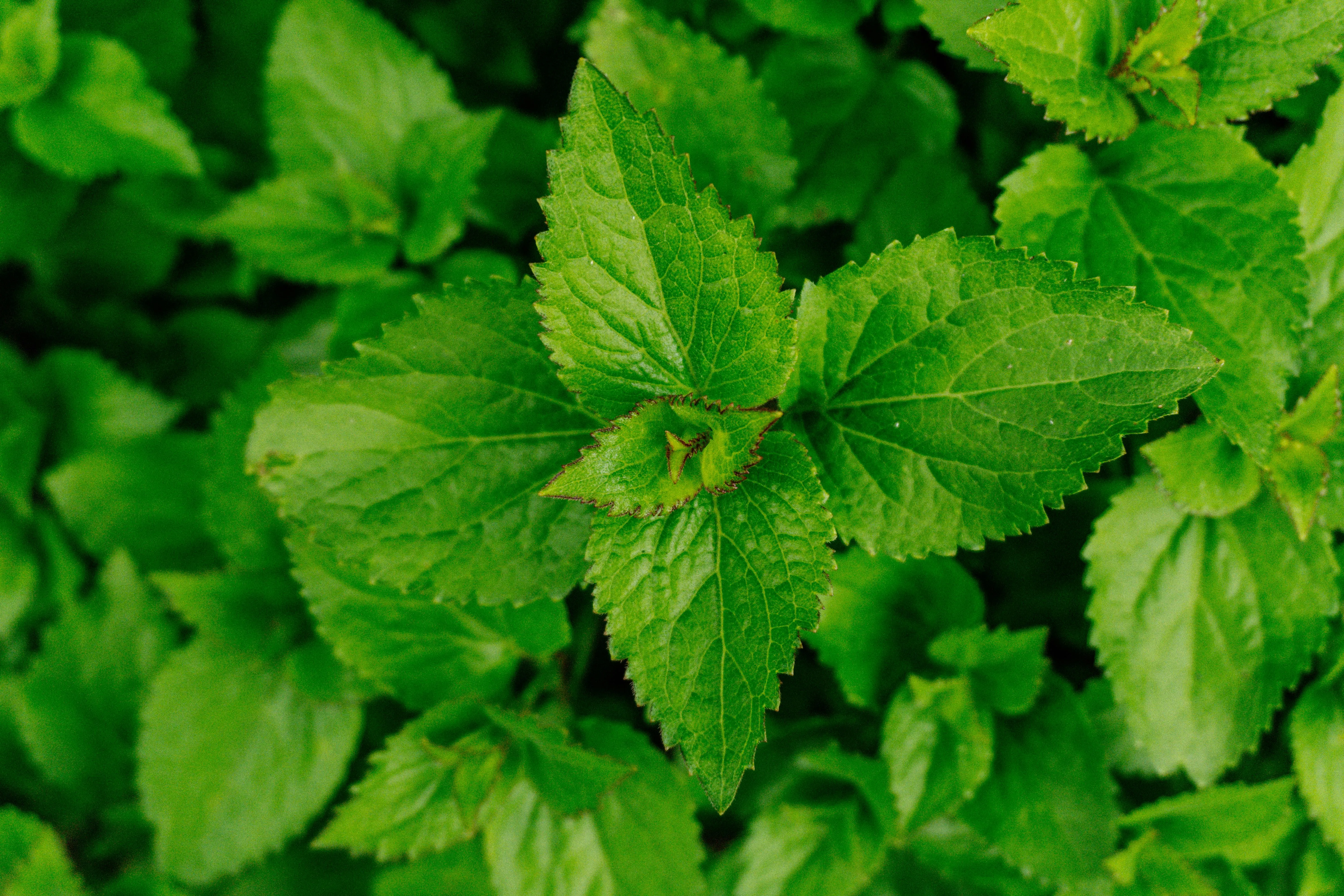
Mint owes its name to Greek mythology. According to legend, Hades, the god of the underworld, fell in love with a nymph named Minthe. His jealous wife Persephone turned the rival into a plant. Though Hades could not undo the spell, he gave her a fresh and delicate aroma.
In ancient Rome, mint was mixed with honey to freshen the breath after wine. One of the oldest spices, very similar to mint in look and taste, is even mentioned in the Gospel of Matthew, though it has never been proven whether it was truly mint. Cultivation of mint began in 17th-century England and from there spread across Europe.
Health benefits:
Mint contains essential oils of menthol, tannins, and polyphenols. It stimulates the heart, relieves palpitations, supports circulation, and reduces pain. It has anti-inflammatory properties, helps fight colds, and lowers fever. It eases stomach aches and spasms, relieves heartburn, bloating, and intestinal irritation, and even hiccups. Mint also supports liver and gallbladder function, helping remove stones. Its essential oils heal cuts and wounds.
Mint has a relaxing effect, helping reduce nervous tension and restore strength. It is also good for the skin — evening out complexion, treating inflammation, acne, and vascular “spider veins.” Mouth rinses with mint infusions are used for cavities and gum inflammation. Mint is also considered an aphrodisiac.
Side effects:
None are known.
Recipe: Strawberries with Lemon and Mint
Place a few chilled strawberries in a small bowl or glass, drizzle with lemon juice, sprinkle with fine sugar and lemon zest, and garnish with mint leaves. Perfect with a glass of chilled champagne.