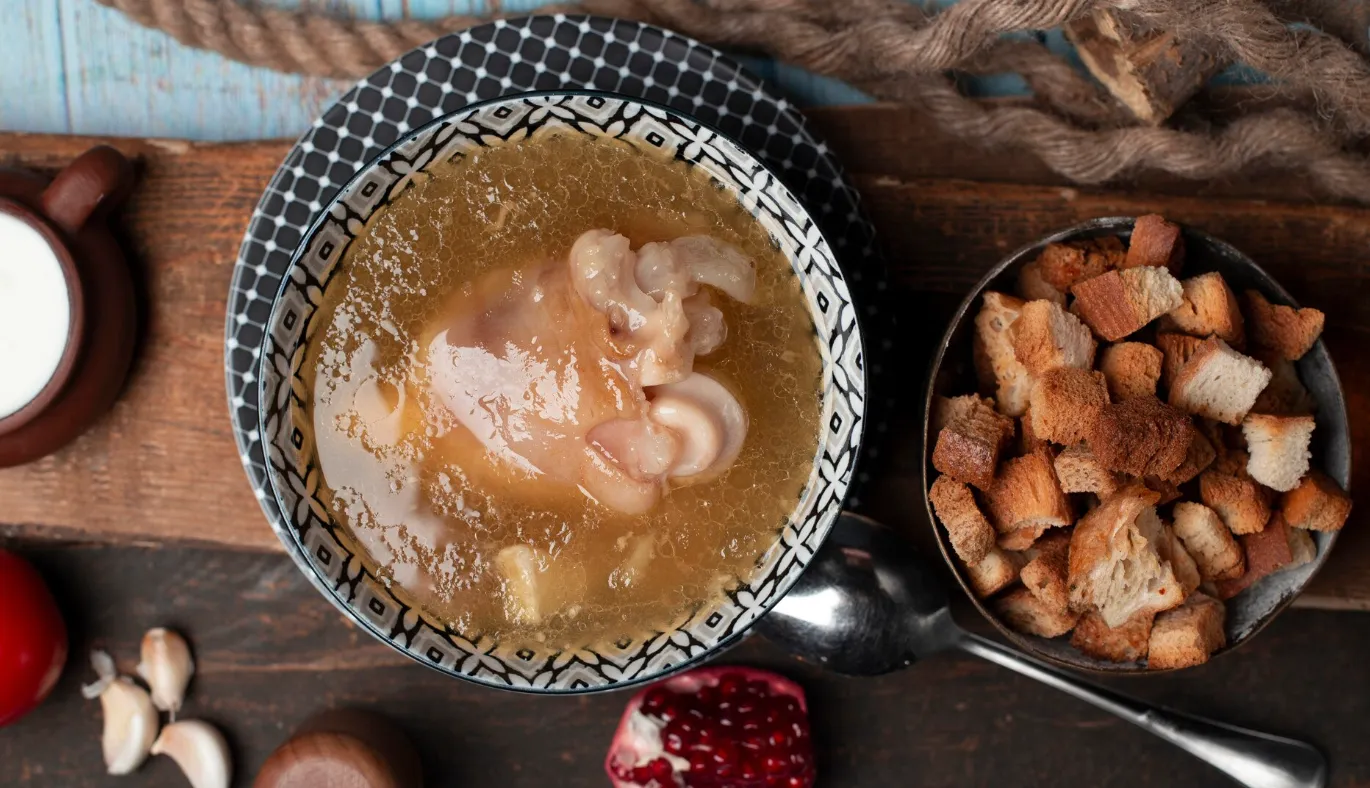
There’s a legend about the origins of aspic. In the northern lands, when hunters went out for days in search of game, they carried with them solidified, jelly-like broth. It was highly nutritious, kept well, easy to transport, and on the fire quickly turned into a warming first course. This ability to store well made it a favorite among the people.
Until the 18th century, aspic (or meat jelly) was neither a separate nor a particularly popular dish. After large feasts in wealthy households, leftovers of poultry, meat, fish, and vegetables were placed in bowls, covered with rich broth, and stored in the cellar or left outside in the cold. The next day, the congealed dishes were eaten, mostly by the servants.
Inspired by the French galantine, aspic gradually became more refined and beloved. Vegetables, quail eggs, and natural coloring from turmeric or saffron were added, and it began to appear more frequently at noble tables. Yet its humble origins should not be forgotten.
To cook a flavorful aspic, you’ll need meat — ideally a mix (poultry, beef) — and collagen-rich cuts such as ears, feet (paws, wings), and tails. The broth must include root vegetables (carrots, parsley root, parsnip), onion, as well as peppercorns (black, white, or green), allspice, and cloves.
If the meat is very fresh, it’s best to soak it briefly in water; otherwise, the broth may turn cloudy. For a clear, jelly-like aspic, you should never add water during cooking. If it happens that the aspic doesn’t set (because of too few collagen-rich parts), plain gelatin can save the day — though it’s best not to rely on it.