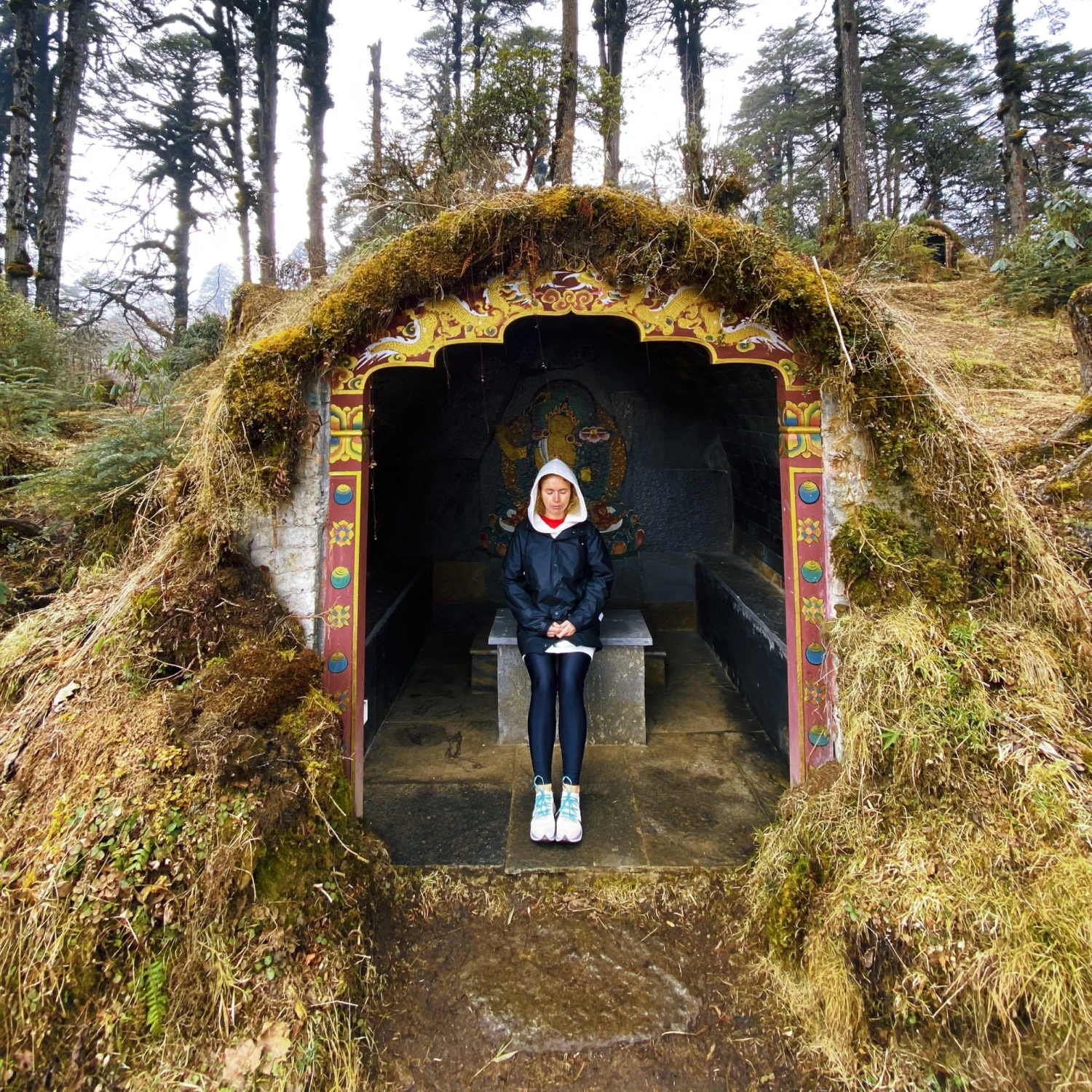
Bhutan is located on the Silk Road between India and China, in the Himalayas. This small Buddhist monarchical state was almost last on our list of unvisited countries in the vast region of South and Southeast Asia.
About residents, views on ecology and nature
Bhutans should probably be divided into three types: urban dwellers, villagers, small hamlets and highland dwellers. The mentality of each of them is different. Bhutan has long been closed to tourists, and now, 2020, the guide Lonely Planet has named it the country of the year for travel. This does not promise an influx of tourists immediately, but signals that the country is ready to receive guests. That's not always the case. Not to seem like the material is critical, Bhutan is incredible. But on the indicative side of the coin, there is always the reverse. For the sobriety of sensations, we will tell you how both felt.
Bhutan is the first carbon-negative country in the world. This means that it absorbs more carbon than it produces. Roughly speaking, it is the only state in the world that benefits nature. On the one hand, being in the Himalayas, it is not so difficult, on the other - there really are no large productions here. Political friendship with India makes it easy to carry out many processes that harm nature outside the country. For example, hunting is prohibited here and only recently was it allowed to fish in mountain rivers — under license and only in specially designated places. Also in the country there are no farms, no meat and sausage production. Bhutanese like to emphasize that they eat meat, but do not kill. There is a lot of hypocrisy in this fact: they say, killing animals is bad, but we eat meat, we just import it from India. At the same time, the highland villages almost certainly continue to kill cattle and store them with the old methods - drying and drying, salting.
Another striking fact is that in agriculture, the use of pesticides and other chemicals is prohibited. All local fruits and vegetables are “organic”. Smoking, import and sale of cigarettes are prohibited. They allegedly found gold in one of the mountains, but they do not dig it up — nature is a holiday for them. Bhutanese strive to keep the landscape pristine.
Instead of GDP, HDL, gross national happiness, is used here. It is a measure of quality of life, which at the state level is considered more important than money. No outdoor advertising. Bhutan has never been conquered by anyone. In general. He was always independent.
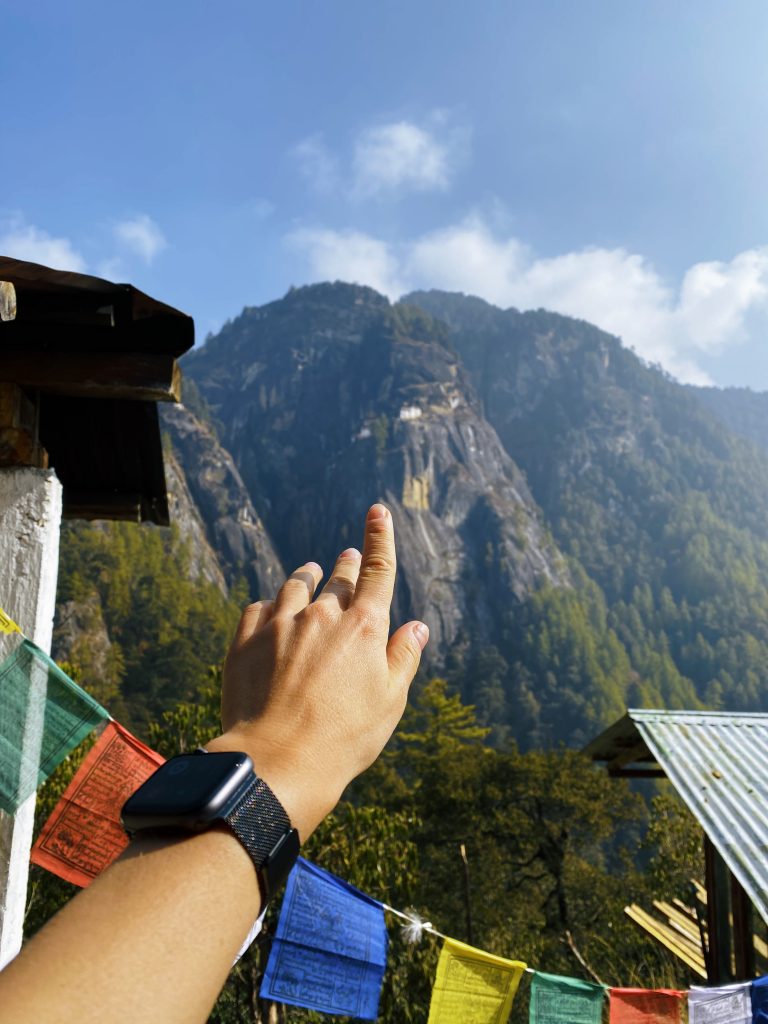
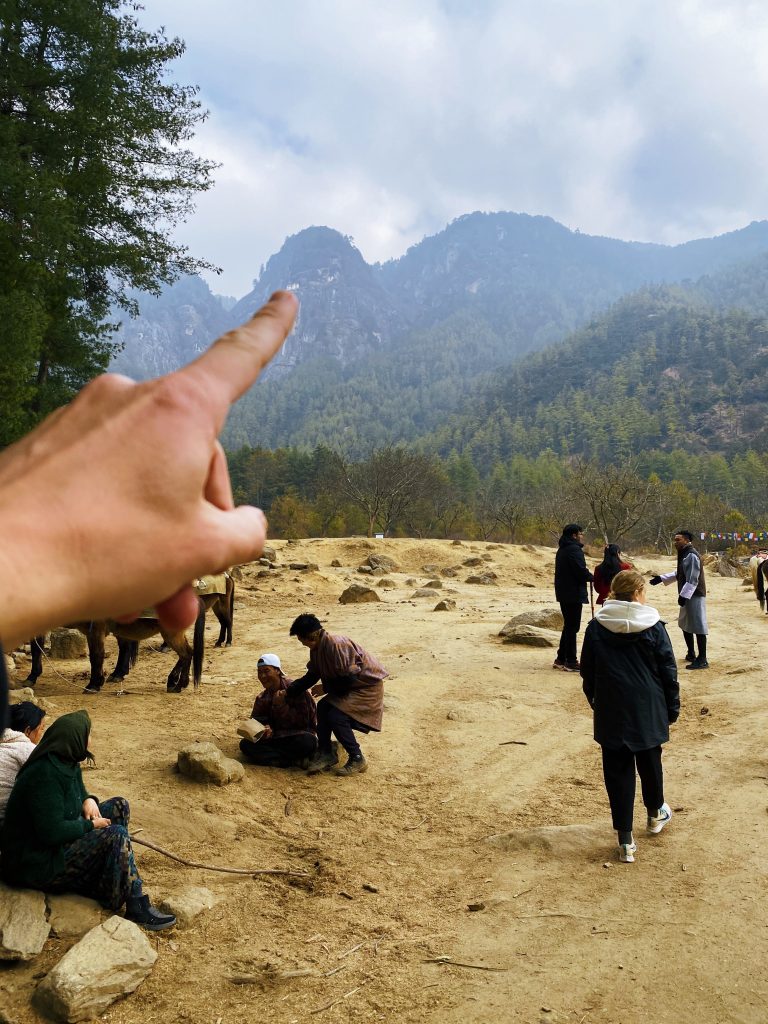
What impresses from the beginning and does not let go until the end is nature. It is pristine and incredible: with crystal mountain rivers, huge pastures of animals and birds. And all this in large quantities. The mountains also look amazing: stony, covered with forests, river furrows, in sacred places they are hung with colorful prayer flags “for good taste”: they are hung just like that. Which way the wind blows, good karma will go there. I hung more, I did more good things. But there is another type of flags in the mountains, high and white. They are placed after death and cremation, in memory of the past.
About life, customs and living conditions
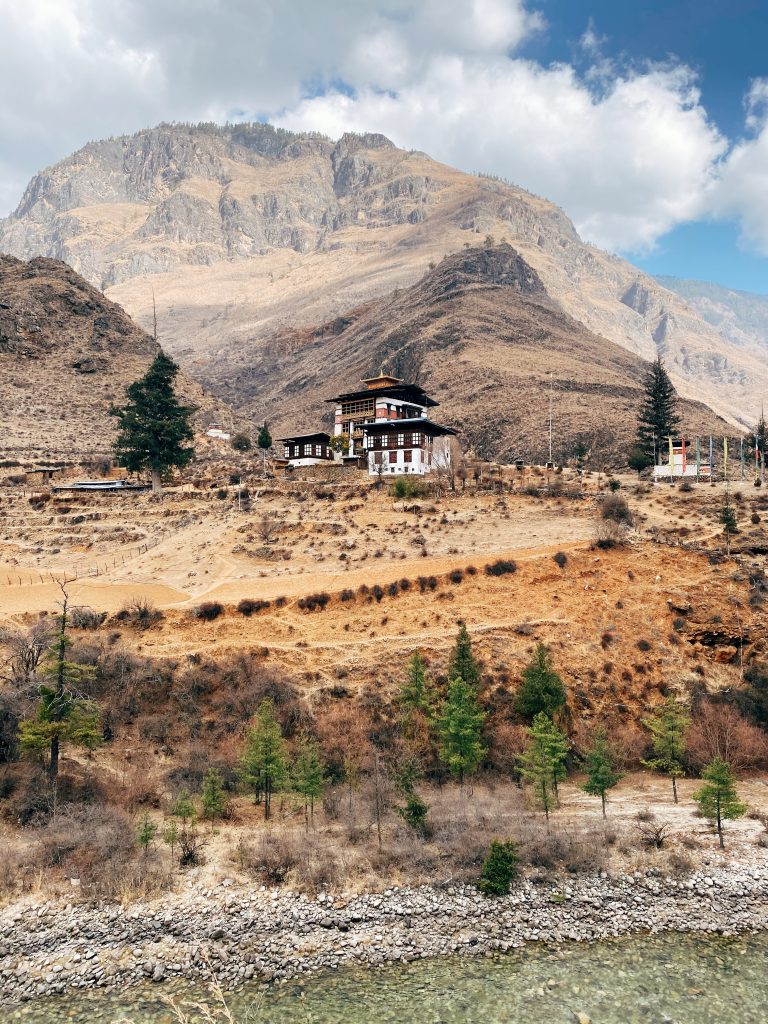
Life is arranged, by modern standards, weakly. If you do not take into account 2-3 global hotel chains, the best offers for accommodation for tourists froze somewhere on the level of Eastern Europe in the 70s-80s. The quality of everything around is very low: hotels, newly built attractions, streets. Something smartly modern — only imports, even roads and important houses are built by Hindus. At the same time, all signs in the country are standardized - the total absence of advertising and billboards, neon signs is really impressive.
Rural houses are traditionally three-story and with a large plot on which to grow vegetables, rice or keep livestock. The ground floor serves animals and land, there are barns and breads. On the second they live — sleep, pray, prepare food. A third floor without walls, it implies a tight good roof and serves as a warehouse, storage or refrigerator. Corn, chiles, cheeses and vegetables are stored and dried here for the cold season. The higher in the mountains, the more common are the cheeses from yak milk, the lower and closer to the cities — the more cow products. In cities, they live mainly in apartments.
There is no heating in the country. In winter — 0 degrees, or even lower. There are heaters and sometimes air conditioners, but sleeping in “normal” hotels in thermal underwear is common. Dine in two sweaters and a jacket in a restaurant — too. Service in the usual sense of the word is often absent. Bhutanese try, but do not understand why bringing a pre-ordered dinner with a delay of 30 minutes, which you have to wait in a cold room, is not ok, or why flocks of large stray dogs on the territory of the hotel are also not ok.
From the global world, the country so far takes mostly bad — cheap processed food, which actively displaces a healthy set of products, Facebook and YouTube in every teenager's smartphone. There is no hobby in particular, except shooting: it is a national sport and a popular activity. For example, in the morning in Thimphu, many young people choose not only to run, but also to the shooting range.
If you look at the villages and villages (you can't reach the highlands, a tourist visa implies a license to see only certain parts of the country), then people live in the Middle Ages. Houses are often built from clay, wood and straw. In cities - basic panel construction, with one nuance: the city should look like 100 years ago, so it is forbidden to build tall buildings here, and the appearance of the facades of any buildings is regulated. Since the 70s, there is also a law that houses must be decorated. The more decorated the facade, the richer the family that owns it. Obviously, the poor population is not up to carving and paint.
Many of the facades are decorated with images of male genitalia in all imaginable and unimaginable colors and sizes: in Bhutan, the cult of phallus flourishes. There is a legend that a long time ago one of the saints defeated evil with his own penis. Therefore, phallus in Bhutan is a popular souvenir. The obligatory program also includes a visit to the Temple of Fertility. Girls who are planning a pregnancy carry baskets with trays here, and a penis is mandatory for them. The minister reads mantras and “sanctifies” the future mother with a penis brought. It looks funny: with us, a girl in her 30s brought to the temple, in addition to a basket and other things, a thick golden penis and was consecrated with a touch on the forehead and shoulders - just as an initiation in a knight.
How to get to Bhutan
For some reason, it is believed that it is difficult to get to Bhutan. It's not like that. But there is a certain quota for the number of tourists per year, and you can get to the country only through an accredited travel agency. It costs a lot - $250 per day per person. This amount includes accommodation, movement and food. But you should not wait for miracles - this is a poor tourist country. Only local airlines fly to Bhutan, and they are not cheap either. For a four-day trip with flights (Kathmandu - Bhutan - Bangkok) we paid $3500.
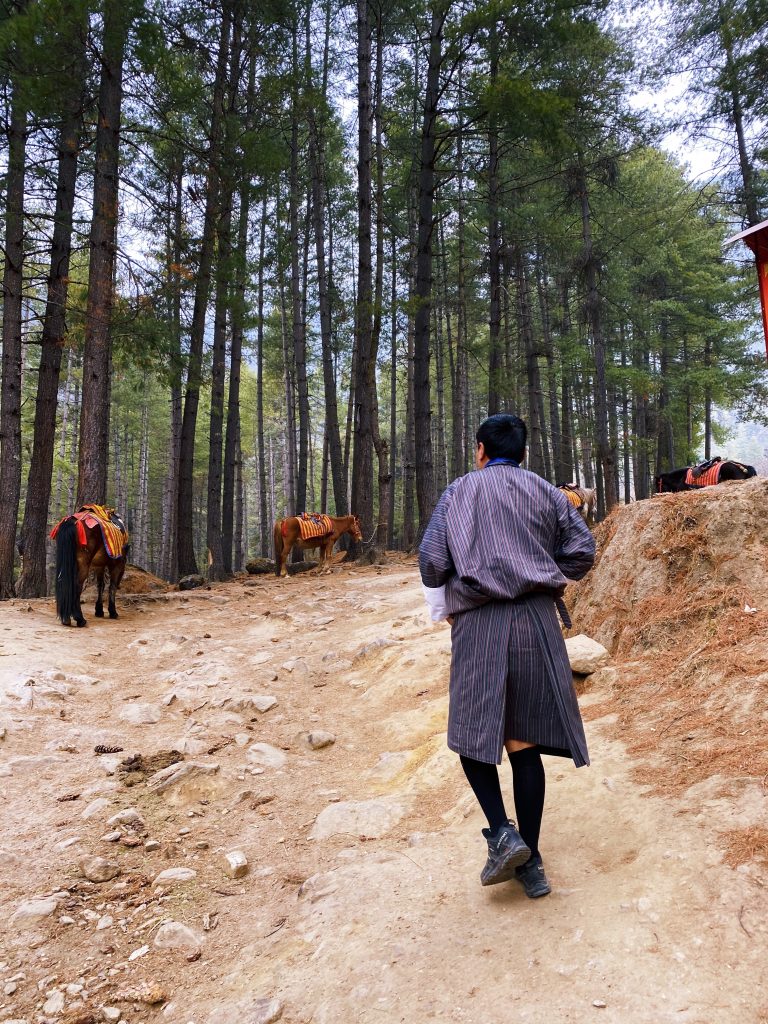
We had a car with a driver and a guide, and every evening we were asked to take us to the market to buy fruit and nuts. Certified guides are very well trained. With a deep knowledge of history, but often with the “right” answers. Everyone we met was very friendly, very open and very diligent. This is another strong point of the country: English is the second official language in Bhutan, so the king decided. The entire younger generation from childhood speaks freely. Thus, the king introduced a strict rule of wearing national clothes for all local civil servants and guides. You just won't get into any government agency or national museum if you don't have a checkered plaid skirt, golf shoes, shoes, and a certain color scarf on you. Scarves vary in shades depending on rank and purpose.
Fans of live like a local like us have nothing to do in Bhutan. Tourism in the modern sense of the word is just beginning to come here, and I think that soon everything will start to change quickly. Something in the good and something in the bad sense. For a few days, if there is a desire and opportunity, it is definitely worth going. After all, there are not so many safe “medieval” with a cool nature on the planet.
About nutrition, diet and products
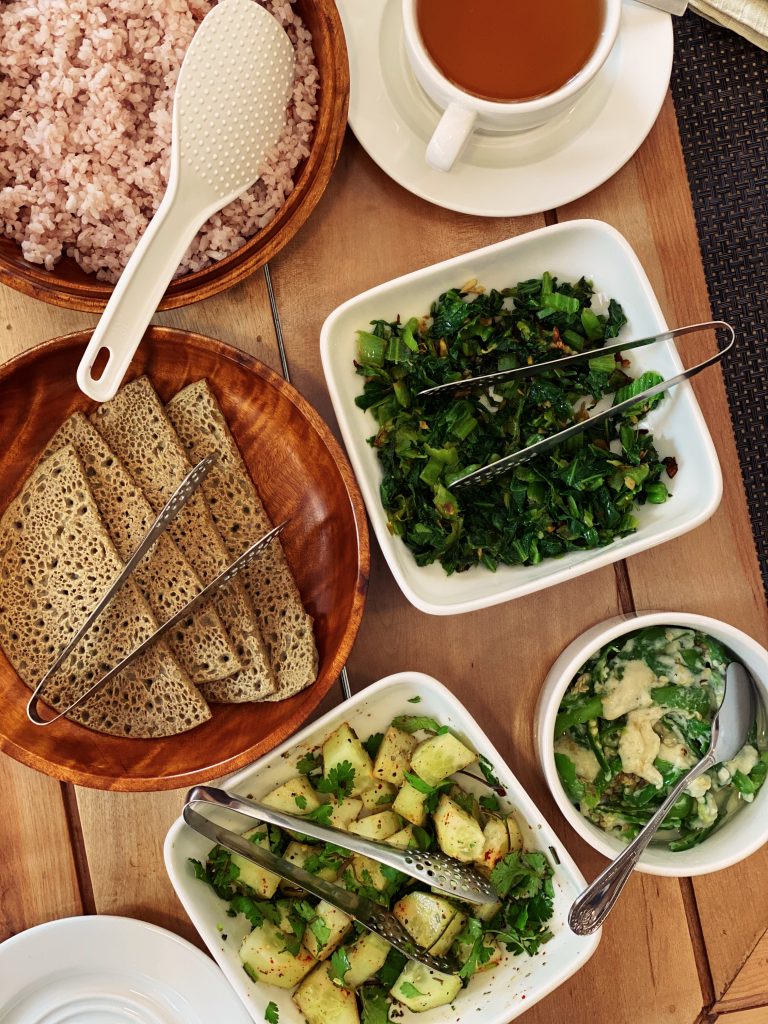
There is essentially no knowledge about nutrition and medicine: something like the Ukraine of the early 90s with Yupi, margarine and other bad in packages. There is a big gap in the diet: the most remote villages still eat healthy food, albeit with little variety. Their menu includes unpolished rice, a lot of greens, cabbage, pumpkin, fruits, eggs, cheeses dried to the state of stone, which simply dissolve and chew in the mouth for hours. As a nutritionist, I note - this is a cool source of protein and fat from a whole, unpasteurized product. Such hard cheeses helped isolated mountain dwellers survive cold winters.
The markets are large, vibrant, very showy. Overflowing with local produce and imported. In the capital, they were even divided into different floors. Imported products are of course cheaper, and between tangerines from Bhutan and Indian watermelon, the local will choose the latter. In small villages, the older population will opt for traditional rice, vegetables and eggs, while those who are younger, unfortunately, are totally absorbed in the colorful packaging of processed food: instant coffee, sweet gases effervescent, including powdered, noodles in glasses and other feed.
From what is included in the category “both tasty and healthy”:
Chili cheese.That, in fact, is the whole dish. Young fermented cow cheeses are melted in a large amount of chopped green chili. It is spicy, it is tasty and very nutritious.
Lentils.Given friendship with India. Not that legumes are often grown in Bhutan, but now they eat a lot in the Indian manner: with vegetables, pickles and dozens of spices. In addition to dala, Indian bread and roti cakes, chapati and alu paratha, tortillas with potato spicy layer are noticed.