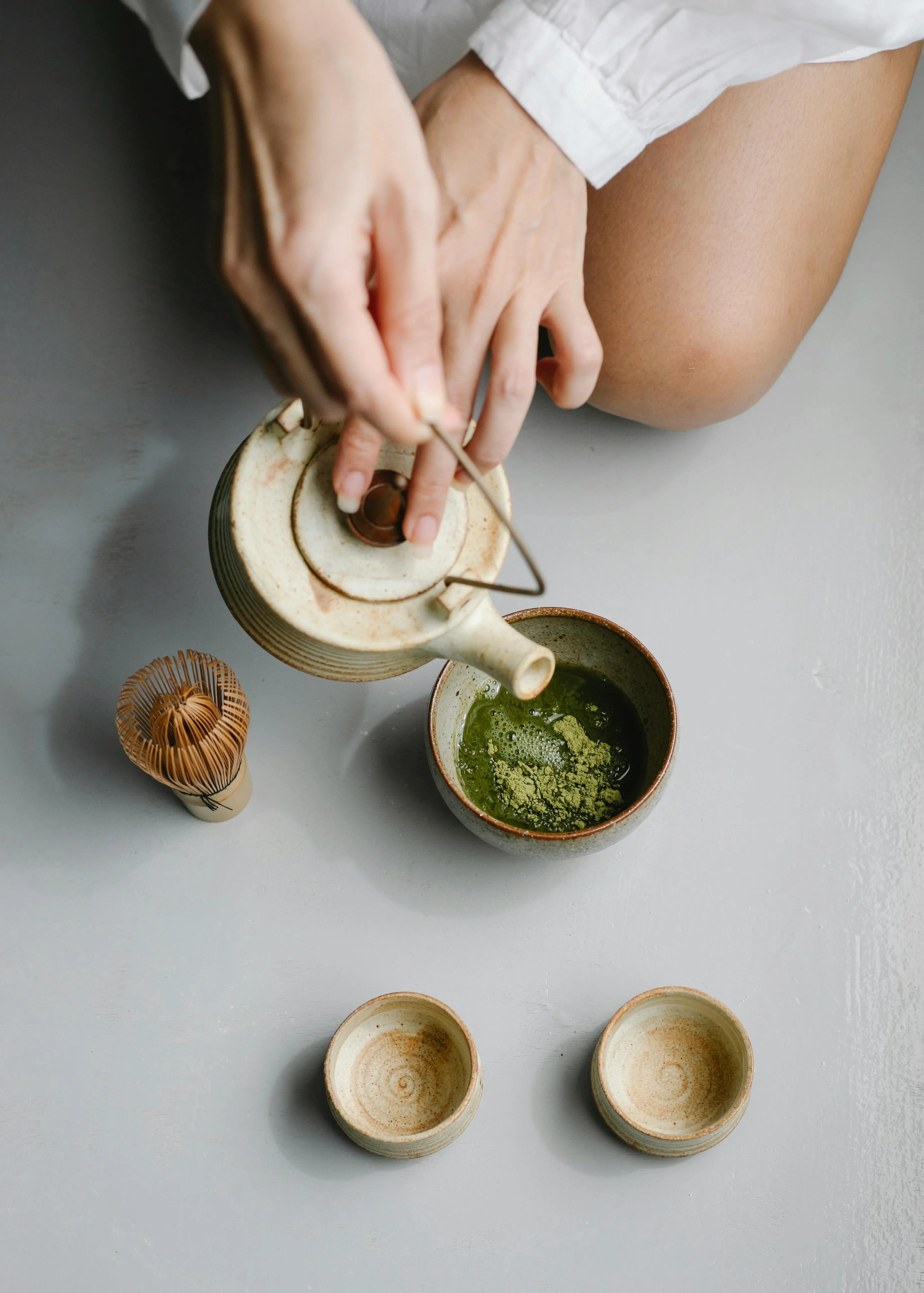
Grinding young tea shoots grown in the shade into fine powder is about centuries of tradition and respect. Preparing matcha for someone close, inhaling its aroma, discussing the nuances of flavor — that too is respect and tradition. Matcha may not be understood at first, and that’s okay. Matcha is about the “here and now,” and always about quality. For me, this tea is complete harmony.
Good tea has become part of my daily ritual. Every morning I begin (after water) with a large glass of fine sencha. In hot weather, we prepare cold-brew teas — 12 hours steeped in the fridge. We drink them from wine glasses. Matcha is the most ritualistic of all: a fine powder of shaded leaf tips. Alone or with others, you pause to savor — awareness, care, attention. It’s a simple tool, accessible to anyone, to show kindness to yourself and to others.
When you drink matcha, you drink the whole tea leaf. That’s why quality matters — not just any green powder. A few (unsolicited) tips:

- It’s about connoisseurship. A slow, mindful appreciation — from origin and history to taste and how it feels in the body. Not only tea can be approached this way.
- The ability to enjoy. Pause and ask yourself: what exactly tastes good? What makes this different? That attention can lower stress, support mental health, and anchor you in small details. You can even start with sencha.
- Tea energizes without tension, clears the mind, relaxes the body, supports metabolism, and improves overall well-being.
- Many people today confuse relaxation with exhaustion, and “tonus” with stress. Tea is a small step toward balance.

Scientifically proven:
- Green tea contains polyphenols (catechins) that neutralize free radicals. Oxidative stress comes from diet errors, pollution, even negative thinking. High-quality green tea is one way to slow aging.
- EGCG (epigallocatechin-3-gallate) actively protects cells from damage.
- Brain function: softer caffeine, paired with L-theanine and GABA, enhances focus.
- Metabolism: green tea has been shown to boost fat metabolism by 17% compared to placebo.
- Antioxidant role: studied for potential effects on breast, prostate, and colorectal cancer.
- Neuroprotection: catechins may help in Alzheimer’s, dementia, and Parkinson’s.
- Antibacterial effect, particularly in oral health, working like an oral probiotic.

Preparation is an act of care. We are social beings; communication is key to life. The ability to express emotions and share without hurting others is a skill worth cultivating. Tea can be one of the simplest tools to practice that awareness.